Next up, is the long awaited, much anticipated, deepest topic we’ve ever selected - What can be determined by closets?
Initially, we had tossed out a late July date, but we have moved that now (after somewhat getting a core consensus) to Wednesday, August 5th.
No prep needed for this one, especially with everyone on summer mode. “Singest of summer in full-throated ease!” (John Keats). However, I did wish to propose that we each bring one food/drink/other item to share that reveals something kind of funny or unexpected about each of us, something we tend to keep closeted, something possibly a little uncouth or mildly embarrassing in more refined company. I know my food/drink item!
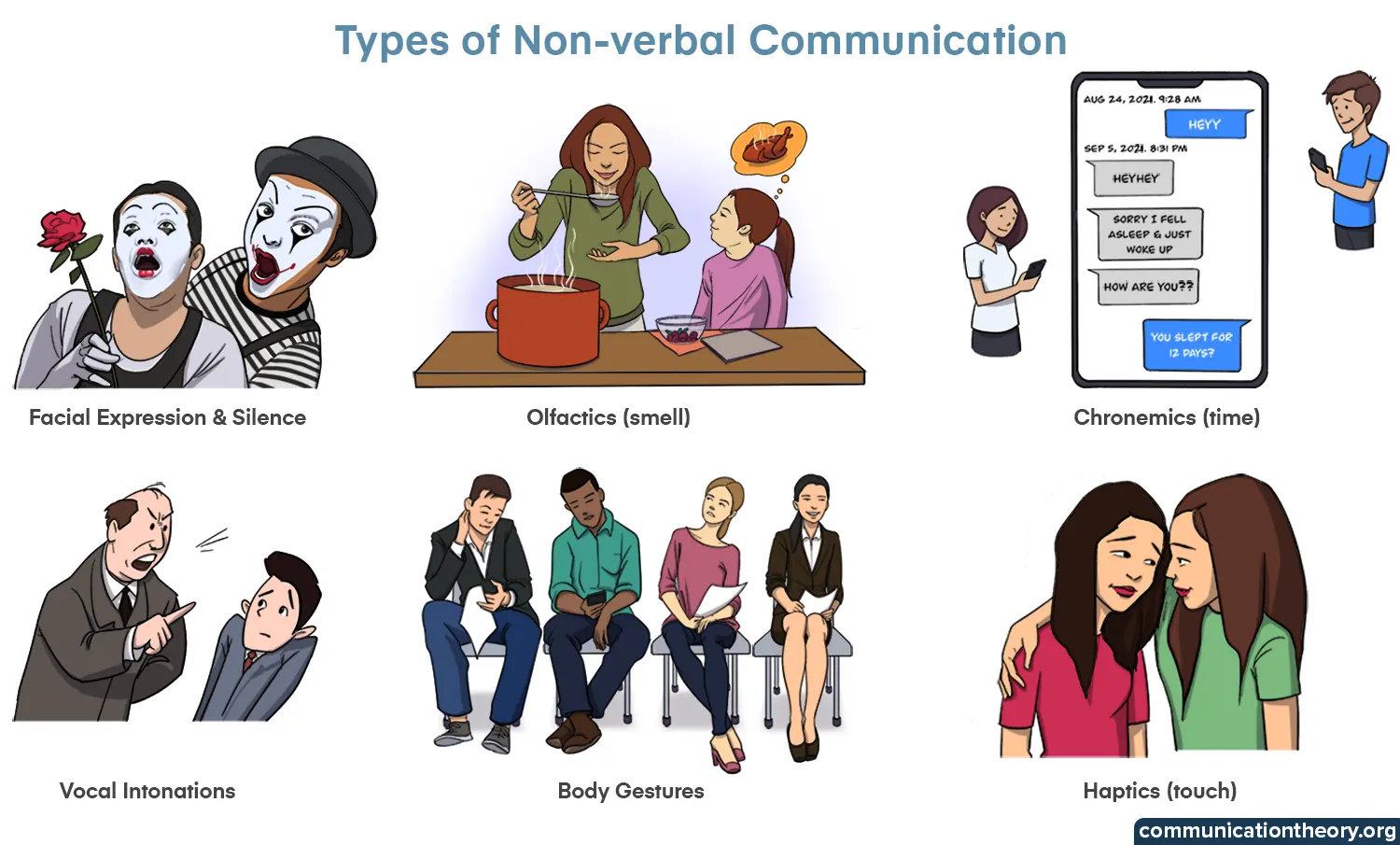
3. This is another video getting into signs, signifieds, and signifiers, which builds in useful ways from the Chomsky overview, since this is getting us into more particulars of linguistics and how we communicate with speech, written words, symbols, acting things out, etc: https://youtu.be/0JtJu9HdQVM?feature=shared
a. I really wanted to also bridge this to the next step which is Derrida, deconstruction, unstable meanings, differánce (only knowing definitions by what things are not, but not really by what they are), but am restraining myself. It is so cool though & one of my favorite things to teach grad students. I definitely don't believe in stable meanings & find it funny how often people seem to be so sure footed that anyone is going to know what they mean or that they are going to know what I/anyone else mean/s.
b. Then there was an article about psychosis, Derrida concepts, and the inability to overlook instability of meanings (which is apparently required for us to be "normal"), so that's also super interesting if we all applied Derrida to every convo we had - wouldn't go so well. No need to read that, but if you want to, it's linked here.
5. Poems work for me a lot better than most things people verbally (or via writing) say in sentences or paragraphs, as far as me getting the meaning much more fully, and likewise I think it's easier to say what I mean via a poem or via poetic prose or some other more visual means. A normal sentence (especially spoken) falls short of what I would have meant every single time.
a. “In a Station of a Metro" by Ezra Pound (poem in full):
The apparition of these faces in the crowd: Petals on a wet, black bough.
b. A haiku by Mizuta Masahide, 17th-century Japanese poet:
Barn's burnt down --
now
I can see the moon.
From Lavonne:
A short article on the impacts of silent communication:
Kind of from Collette (related to some of the ideas she was explaining last banter, which led us to this topic):
From Jivan:
As mammals we are always using our brains to process all the inputs around us. That is the way we survived. Humans tend to automatically embellish the input with thoughts such as subject, object and stories.
Success and Failure of Visual Communication.
The input might be something you pick up with your eyes (as well as the 4 other senses). The success of visual communication is that direct thoughts inspire direct action. When our ancestors saw a tiger the ancestor said, “It’s a tiger. Run.” Look at Picasso’s Guernica. Or Van Gogh’s Starry Night. They make you want to directly do something. The failure is that sometimes our ancestors died anyway, and ugliness is very difficult to get rid of.
Success and Failure of Verbal Communication
The input might be a verbal memory from your brain (in written or sound form). It always refers to a complicated construct or story and always misses the boat. “That is a beautiful person.I love or hate her, him, they”. Or “Make America Great Again”. The verbiage becomes part of a narrative that you have already stored in your subconscious. It becomes an addiction. Not only is the narrative itself addictive, but getting what you think you want is also addictive. It is a constant story in your mind that keeps repeating itself. It causes stress. The communication triggers both subject and object. The success of verbal communication is that technology has improved. The failure is that we are always on the brink of war. We tend to think the story is real. We get stuck in our minds. We feel stressed. It causes destruction of our environment. It overvalues money.
THE MIND
It takes about 500 msec before we begin to process whatever happens in the “here and now”. At that time the inputs pass through the 6 gates, and we become aware of the thing. This is the beginning of perception. At this point we can go to sleep and grasp at thoughts that come up. Or we can stay awake to whatever arises. In Sleep we react. In Awakeness we savor whatever experience we are having. Meditation is a skill to learn so that we can control our experience rather than being limited to our concepts about it. We learn to dance with Sleep, the conditioned overprotective conceptual framework. Here is a diagram about this:
Plan on: Saving room for dinner! Annette is making a main dish related to our topic, and will also have coffee, tea, sparkling water, possibly "some weird variety of snacks."
Bring: "If you're feeling like going with the theme, you could bring something you personally, or culturally, associate with the word "dinner" from childhood or some cut veggies or fruit or a drink of any kind."
A little topic preview:
Annette had read a book recently about culture codes (see book cover below), and then she and I just free-formed related tangents over a yummy Himalayan dinner on this topic. The examples Annette shared from the book were really cool and got my wheels turning. The main one she shared (which I may butcher but Annette will clarify night of banter) had to do with some coffee company from the US thinking they’d make a bunch of easy money in Japan by tapping into an untapped coffee market there a while back, but then when they tried it went over like a lead balloon because it turned out the Japanese did not have the cozy associations with coffee drinking, coffee socializing, coffee smells, family coffee related nostalgic experiences, etc.that much of the rest of the world has in their family/friend/work systems. So then they had to take a more long-game plan for their business model and kind of manufacture those experiences in for their target Japanese audience; that part was kind of gross and capitalistic manipulative, but still interesting to mull over, especially related to any of the ways any of us become parts of who we are in relation to products or economic cultural coding.
2. Annette will fill us in on the rest, so you don't have to overly prep for this one, other than maybe mull over ideas about your own cultural coding that you are aware of!
Thanks, everyone, for voting. It was neck and neck there for a while 🫣 🤣 between psychology of humor & Hidden Brain’s podcast episode “What’s better than being happy?” The podcast episode won out by two votes though. This makes our January topic easy, plus exploring humor in deep, dark January may be just the thing!
I know one or two folks (Mike Fanning!) do not favour podcast episodes, but this podcast is much like a quality long-journal article rooted in research layers. It is created by human behaviour / social science journalist Shankar Vedantam (former Washington Post / current NPR, originally from Bengaluru, India) and his guest in this episode is, psychologist/professor Jordi Quoidbach (grew up / studied in Belgium, lives in Barcelona).
Two potentially good things about our topic with the holiday - 1. Among holiday busyness, prep for banter will be easy and streamlined with all of us just needing to listen to the same 58 minute podcast episode. No other prep reading needed. And here it is:
2. The topic may be a particularly good one since holidays push and promote cheer and merriment, but often are rife with all the other layers of human emotions too - those certainly left off our greeting cards and out of caroller's songs. Here is Hidden Brain’s summary of the topic:
"Many of us go to great lengths to be happy. But is our singular focus on feeling good actually making us miserable? This week, psychologist Jordi Quoidbach explores what happens when we try to live in an emotional monoculture, and makes a case for letting it all in — the ups … and the downs."
I know that Lavonne, Blase, Mitch, Annette, Isaac, and I are coming since we picked this date, but for others of you, please confirm if you’re coming or if anyone is bringing a guest so I have a headcount for crepes! Bring any fruits or savoury items you care to for fill ingredients, and any drinks to share. I’ll have homemade chocolate sauce & a tall, warm stack of crepes.
Where: at Lavonne’s in Kalispell. She plans to make a pot of chili. Sabine is bringing guac and chips. Feel welcome to bring drinks or dessert to share as you like.
"The essential function of art is moral. But a passionate, implicit morality, not didactic. A morality which changes the blood, rather than the mind. Changes the blood first. The mind follows later [...]."
- DH Lawrence
Prep materials (try to glance over each of these ahead of time so we can all pull from overlapping materials & go deeper in the convo):
When I first read the topic title I went, immediately, to sculpture and painting. Reading the Britannica article, I saw that it focused more on literature, which would be easier to discuss (along w/ music lyrics). I imagine that spoken and written art is where the most robust discussion will come from but, regardless, I am curious about the earliest indigenous visual art and it’s ties to morality…to start at the ‘beginning’. I did not find many materials on that. If I find some good references to site at banter I will reference them but, below, is a short synapsis of my meandering thoughts and opinions.
The first carvings, paintings and sculptures seemed to be made, largely, to venerate leaders, hunts, battles and gods, or, to associate and identify with a particular tribe, family or custom. With no photography or written language, visual art may have been, largely, a way to keep people, stories and the historical record alive. With those visual depictions, there must have been moral stories told over them that dealt with messages on good (and bad) leadership, ethical hunting and harvesting, stories of encouragement and admonitions from the gods, fables and stories for children and adults to conform to the moral standards of the tribe etc…but the earliest examples of these stories have not been recorded in writing.
Pre-historic visual art was also used to understand the world, astronomical events, weather and climate patterns, growing seasons, the location of water and food sources etc. Science and religion were more intertwined so, inherently, there were likely moral stories associated with most visual art that depicted natural events. That said, early peoples may not have even viewed ‘morality’ with the same individualistic lens as we do today, putting that in the hands of the gods or the customs of the group. Lastly, I wonder if the earliest human visual art, at least that on public display, was allowed to be ‘in the eye of the beholder’, or, if elders and spiritual leaders were responsible for interpreting any moral messages contained within them to the people.
The moral stories associated with visual art of the distant past has been lost to time, but I would imagine that much of that art was also just 'art for arts sake', following an innate human need to express creativity, arouse emotions and to show pride and belonging to a community. Like today, a lot of early primitive visual art may have just been for pleasure, decoration, and to express identity. Wherever early visual art, alone, lies on the spectrum between conveying pure aesthetics to moral stories, our ability to write to it, or about it, probably changed how we view both art, and morality, dramatically.
That was a lot of ‘fluff’ but, hopefully, some fodder for discussion. To wrap my head around the topic I fall back on the earliest forms of visual art and how it may have changed or evolved to convey moral messages. The earliest writing dealt with accounting, politics, laws and religion…all of which contain ‘morality messages’. From that time, since, I feel like, as modern humans, we can ‘read morality’ into almost any form of written art. Visual arts, like painting, instrumental music and sculpture, may simply be art forms that can be more purely aesthetic, and less tainted by moral messages than the written or spoken word?
Blase's contributions:
I'd like to offer the following conversations to our conversation:
Six minute video of two photographers' works side by side:
Calls into question whose morality? or the overall problematic nature of morality in general to be, at times, directly tied to oppression even in the hands of artists: https://www.youtube.com/watch?v=lFBh2tTWc5A&t=286s